

 Back to
Main


A NOTE ON THIS STORY
This is a real person’s real story, shared publicly through a biotech company’s patient voices newsroom series during Amyloidosis Awareness Month. We have changed his name and some identifying details to protect his privacy, but the timeline, the medical details, and the quotes below are his own words, drawn from what he chose to share.
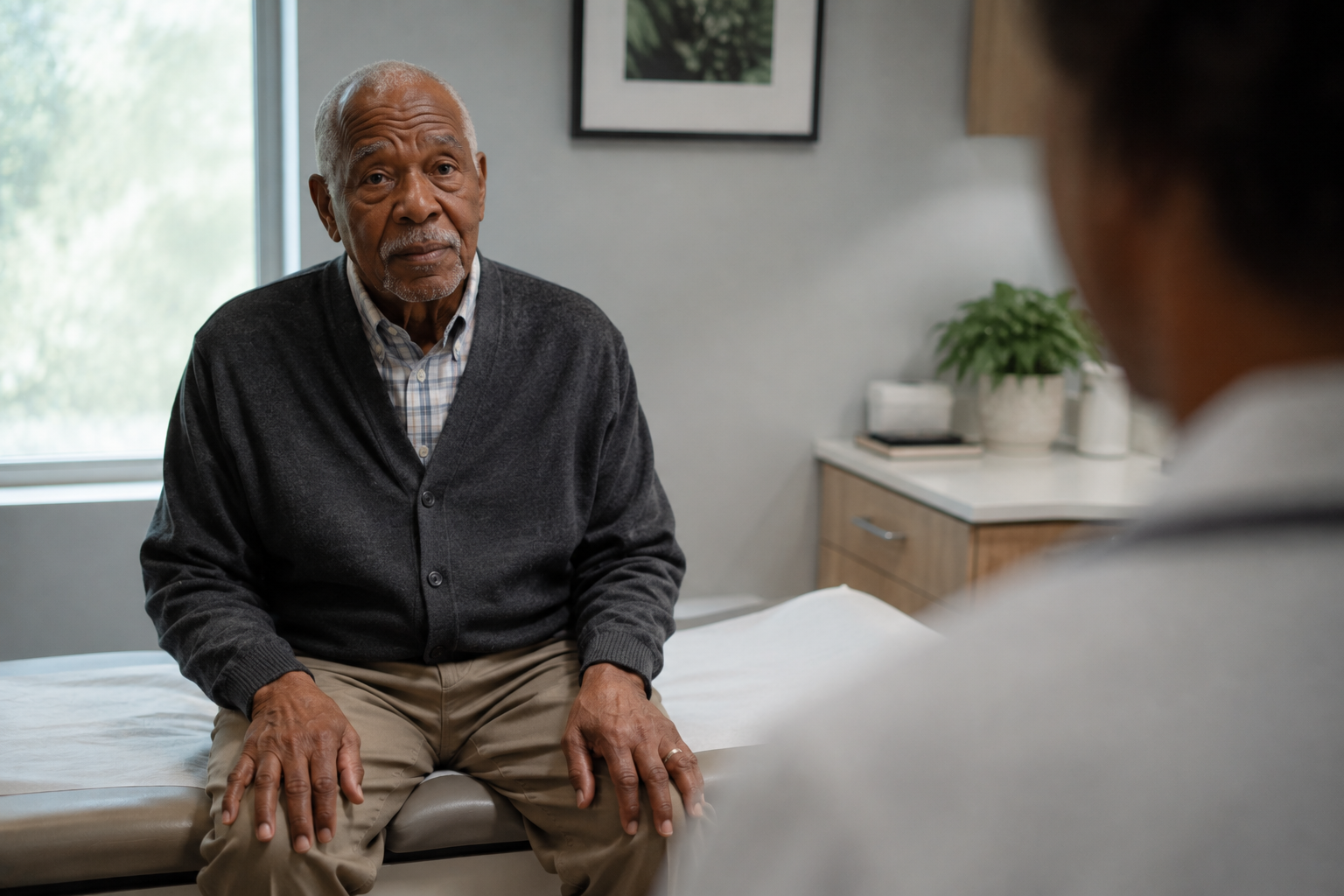
Theo spent decades as a cardiologist in Massachusetts, ordering the tests, reading the scans, and delivering the diagnoses. At 88, retired, he found himself on the other side of that exam table, living with the very kind of heart disease he had spent a career treating in other people: transthyretin amyloid cardiomyopathy, or ATTR-CM.
His own path to a diagnosis started years earlier and far from his heart. “My path to diagnosis started with carpal tunnel syndrome in both hands,” Theo said. “I was able to manage it for a few years with just a wrist brace.” By 2020, it had gotten bad enough that he could not use a computer mouse for more than 10 to 15 minutes without stopping, a real problem for a working physician.
A biopsy he asked for himself
Theo saw a hand surgeon, who scheduled surgery to relieve the carpal tunnel. But it was what Theo did next that mattered most. Around that time, he had read a study showing that roughly ten percent of patients over 50 who underwent carpal tunnel release surgery had a positive biopsy for amyloid protein, a number later studies found to be even higher. Knowing his own age put him at risk, he made a specific request: he asked his surgeon to biopsy the tissue for amyloid while she was already in there.
That single, deliberate ask changed everything. The biopsy came back positive. Several more tests later, Theo had his diagnosis: ATTR-CM.
Two reactions, from two very different vantage points
Being both the physician and the patient gave Theo a split reaction that most people never experience quite the same way. “My reaction as a physician was practical. What should I do next? Is there further testing? What treatments should I explore?” he said. “My reaction as a patient was far more emotional. Some bad words crossed my mind. I worried about survival, just like anyone else who receives this diagnosis.”
What helped was the data. Theo dug into the survival curves for ATTR-CM himself and found real reassurance in how much the treatment landscape had changed. A diagnosis that would have been devastating with no options years earlier now came with real paths forward.
What the disease actually felt like day to day
Theo has been an avid runner for about 50 years, training for stretches of the Boston Marathon course and hitting a personal goal of running a full 5K after turning 80. Living with ATTR-CM changed that, though gradually. “I still jog and walk, but the distances are much shorter,” he said, adding that it is hard to know exactly how much of the change comes from the disease itself and how much comes from simply getting older.
He was also caught off guard by a symptom many people do not expect: his blood pressure, once high enough to require medication, now runs low, especially after exercise, a condition called orthostatic hypotension. It is one of the quieter ways ATTR-CM can rewrite the rules of a body a person thought they knew well.
Perhaps the deepest shift for Theo was in how he now understands the patient experience itself. “My own journey gave me a new appreciation for that side of medicine,” he said, reflecting on the tests, blood draws, and procedures he had ordered for patients throughout his career without always grasping what they felt like from the other side.
Why it stays so easy to miss
Theo is direct about why ATTR-CM continues to slip past so many doctors. “Many early symptoms are vague, especially orthopedic issues like carpal tunnel syndrome or ruptured tendons,” he said. Heart failure symptoms often do not show up until years after those early orthopedic clues have already come and gone, unnoticed for what they really were.
His message to both sides of the exam table is simple. “For clinicians, if you see cardiomyopathy or related orthopedic symptoms in older adults, think about amyloidosis,” he said. “And for patients, especially those who are newly diagnosed, hang in there. Seek providers who are knowledgeable about amyloidosis. Ask questions. Advocate for yourself. The future for people living with ATTR-CM is far more hopeful than it ever was before.”
Key takeaways
— Bilateral carpal tunnel syndrome, in both hands, can be an early warning sign of ATTR-CM, sometimes appearing years before heart symptoms.
— A carpal tunnel release surgery is a real opportunity to ask directly for an amyloid biopsy, especially for patients over 50.
— A drop in blood pressure that used to run high, known as orthostatic hypotension, can be a genuine symptom of ATTR-CM rather than simply a sign of aging.
— Declining exercise tolerance in an older adult deserves a closer look rather than an automatic assumption that it is just age.
— Even physicians who spend their careers diagnosing heart disease can face real emotional weight when the diagnosis becomes personal.
— Advocating for a specific test, even when it means asking your own doctor for something extra, can be the step that leads to an actual diagnosis.
SOURCES
1. IONIS Newsroom, Patient Voices. From Treating ATTR-CM to Living with It: A Cardiologist’s Story
https://ionis.com/newsroom/patient-voices/cardiologist-living-with-attr-cm-amyloidosis-awareness